- What does an SEO service provider actually do?
- An SEO service provider improves your website's visibility in Google's organic results through three core disciplines: technical SEO (site speed, crawlability, schema), on-page optimisation (content, keywords, internal linking), and off-page authority (link building, digital PR). A good Australian SEO provider ties every action to measurable revenue, not vanity metrics.
SEO Agency Australia
Australia's Data-Driven
SEO Agency.
The SEO agency Australia businesses trust for measurable organic growth. As a specialist Australian SEO agency, we fuse deep technical audits, persuasive content strategy and high-quality backlinks to dominate your market and generate a predictable stream of high-value customers from Google.
- 100% five-star reviews on Trustpilot & Google
- No lock-in contracts
- 90-day performance guarantee
Trusted by industry leaders across Australia













In short
Organic SEO at Odin Digital, in plain terms.
Organic SEO is the practice of earning unpaid rankings in Google's search results by fixing technical issues, building the right information architecture, publishing content that answers real search queries, and earning authority signals from other sites.
It suits businesses that want compounding, non-rented traffic rather than pay-per-click leads that stop the day the budget stops — typically businesses with a defined service area or product range and the patience for a programme measured in months, not days.
We measure organic sessions, ranking positions for agreed target queries, indexed page growth, crawl efficiency, and the leads or enquiries those rankings produce in Search Console and GA4.
KPIs are agreed in writing before work starts, reviewed against a 90-day KPI guarantee, and there is no lock-in contract — you can leave at any review point.
Talk to us about SEO
KPIs in writing · 90-day KPI guarantee · no lock-in
Looking for SEO in your city?
This page covers national SEO. For city-specific strategy, pricing and local case studies, go straight to your market — or learn the discipline first through the free tracks in the Odin Academy.
Last updated: October 2026
SEO in Australia
Choosing the right SEO agency in Australia is one of the most consequential decisions you'll make for your business's digital growth. At Odin Digital, we're not just another SEO company - we're a revenue-focused SEO service provider that combines technical excellence, strategic content, and high-quality link building to grow organic leads for our clients, with results reported against agreed KPIs every month. Whether you need a dedicated SEO agency or expert SEO consulting, our complete SEO services cover every aspect of organic growth. If you are weighing up a solo specialist against a full team, our SEO freelancer versus agency comparison explains the trade-offs. Where authority has to be earned rather than built, that work runs alongside our PR agency team, who secure the editorial coverage and citations Google treats as genuine endorsement.
- 93%
- Client retention rate
- 3
- Pillar methodology
- 90 days
- Performance guarantee
- 0
- Lock-in contracts
Our Australian SEO services go beyond rankings. As a full-service SEO provider, we integrate organic search with Google Ads, Facebook advertising, and conversion rate optimisation to build complete digital growth systems. Whether you're a local business needing local SEO, an enterprise requiring national visibility, or an online store needing specialist ecommerce SEO, our proven 3-pillar methodology delivers measurable, compounding results. No lock-in contracts - stay because we deliver, not because you're trapped.
Searching for the right seo company Australia? Odin Digital is the team founders trust for premium search engine optimisation Australia, working as your dedicated seo specialist Australia and seo expert Australia. We deliver performance seo marketing Australia, structured seo packages Australia, and the kind of affordable seo services Australia small operators can scale on, alongside enterprise seo consultant Australia retainers for established brands.
The Opportunity
Stop Losing Customers to Competitors Who Rank Higher Than You.
Partner with a Leading Australian SEO Agency to Claim Your Spot at the Top of Google.
Right now, your ideal customers are searching for the exact services you offer. They're on Google, actively looking for a business they can trust, using terms like "best [your service] in Australia" and "[your industry] experts." They are ready to make a purchase.
The Uncomfortable Truth? They're Finding Your Competitors, Not You.
Every day that your business isn't visible on the first page of Google, you are losing revenue to competitors who may not even offer a better service. They just show up first. In the competitive digital landscape, visibility is everything - and this is precisely why selecting the right SEO agency is one of the most critical business decisions you can make.
Don't Settle for Second Best. Dominate the Search Results.
As a premier Australian SEO agency, we specialise in turning this situation around. We don't just drive more traffic - we connect you with customers who are actively searching for what you offer and are ready to convert. It's not about playing the game. It's about winning it.

The Problem
Stuck in the SEO Black Box?
You've probably been here before. You hired an SEO agency. They promised the coveted "#1 spot on Google." They sent monthly reports filled with jargon - "domain authority," "backlink velocity," "keyword density", that looked impressive but felt hollow.
Your rankings may have even gone up for a few obscure keywords nobody searches for. But your phone isn't ringing more. Your inbox isn't filling up. Your sales team isn't busier. You're paying a hefty monthly retainer for… what, exactly?
This is the SEO Black Box - the dirty secret of every mediocre SEO agency. You put money in. You get reports out. But the connection between your investment and actual business growth? It's invisible. And that's by design.
Vanity Metrics
Rankings for keywords nobody searches for. Impressive reports, zero revenue impact.
Zero Accountability
No clear link between what you're paying and what you're getting. Ever.
Endless Timelines
"SEO takes time" used as an excuse for months - sometimes years, of no real progress.
Hidden Costs
Extra charges for content, technical fixes, and tools that should be included from day one.
You don't need more reports. You need results.
You need to rank for the keywords your ideal customers type into Google right before they're ready to buy. That's exactly why Australian businesses like YCL Jewels choose Odin Digital as their SEO consulting partner — a data-driven approach focused on commercial search terms that lifted their sales by 181% in around four months, measured in Shopify and GA4. You need an SEO strategy laser-focused on one thing: growing your bottom line.
Where Data Finds
its Voice.
A Different Approach
What If SEO Actually Worked?
Imagine opening your laptop each morning and seeing a steady stream of qualified leads who found you organically - people who already trust you because Google told them you're the best. No cold calls. No chasing. No guesswork.
Predictable Pipeline
A reliable flow of high-intent organic traffic that converts into leads and sales every single month - like clockwork.
Compounding ROI
Unlike paid ads that stop the moment you stop paying, SEO compounds. Every month's work builds on the last, driving down your cost-per-acquisition.
Competitive Moat
A dominant organic presence that is extremely difficult for competitors to displace. You become the default choice in your industry.
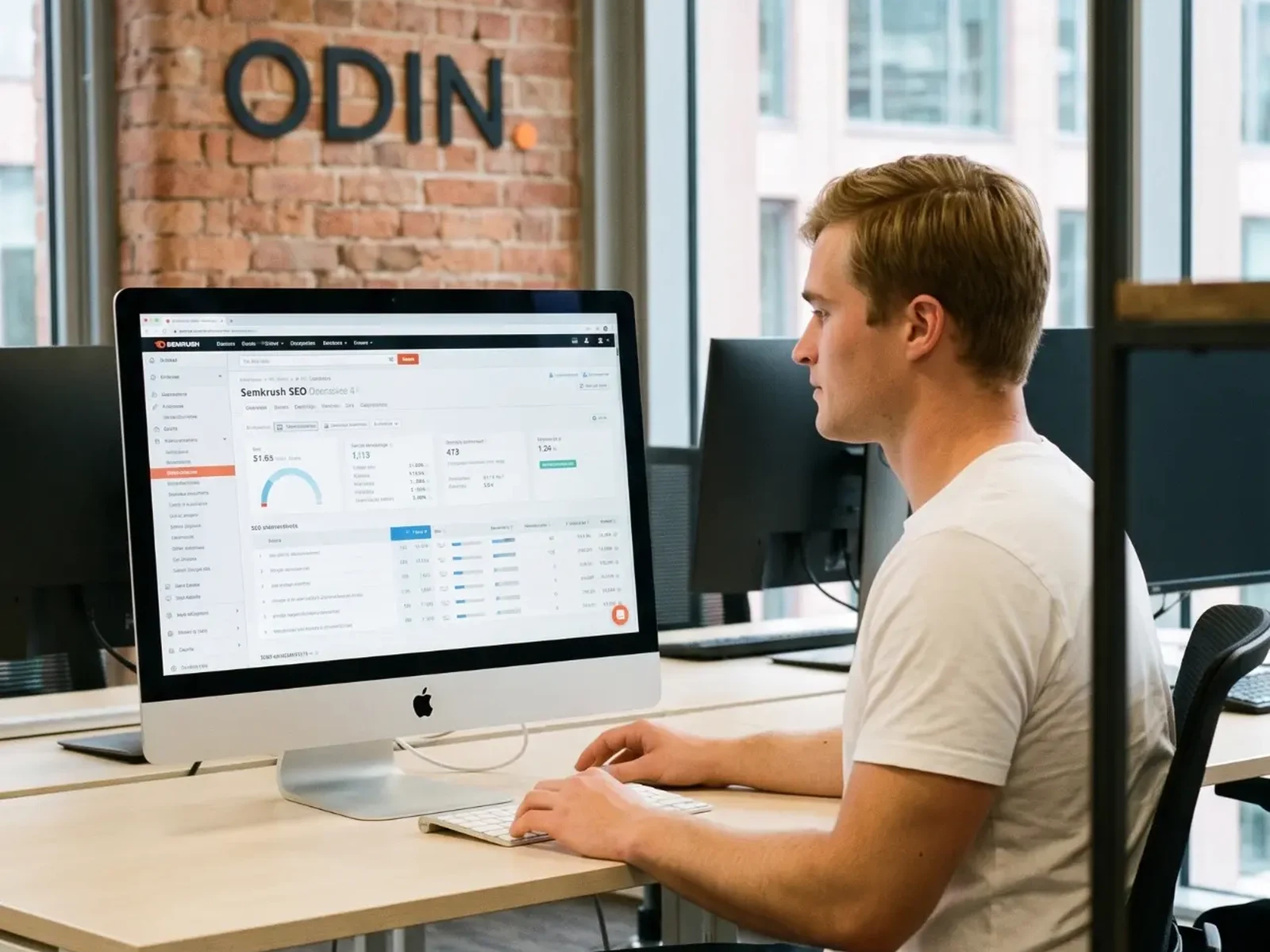
93%
Client Retention Rate
The Solution
Introducing the Odin SEO Method.
At Odin Digital, we're not your typical SEO agency. SEO is not a mysterious service delivered inside a black box. It's a powerful, transparent fusion of science and art - a proprietary system engineered to deliver not just rankings, but revenue. Our SEO agency approach combines thorough keyword research, SEO copywriting and on-page optimisation, content strategy through SEO blog writing, and high-quality backlinks to create sustainable organic growth. Understand how Google keyword rankings work, or explore our latest SEO insights on the blog.
The Science
Exhaustive technical audits, site speed optimisation, powerful backlink profiles, and strategic site architecture that search engines reward.
The Art
Deep customer psychology applied to create content that ranks for high-intent keywords, builds unshakeable trust, and drives action.
We don't just get you to the top of Google. We make sure that when customers find you, they have no choice but to do business with you.
Our Process
Our 3-Pillar SEO System for Dominating Search.
Most agencies throw spaghetti at the wall. As a specialist SEO agency, we follow a proven, battle-tested system built on three pillars - Technical SEO, Content Marketing, and Link Building, that delivers measurable results at every stage.
PILLAR 01
Technical SEO Audit & Competitive Domination
We start by conducting a comprehensive technical SEO audit across 200+ checkpoints to build an unshakeable foundation. Our on-page optimisation process includes deep-dive competitive gap analysis, site architecture restructuring, and comprehensive keyword research to find the most profitable search terms in your industry.
Full technical SEO audit (200+ checkpoints)
Competitor reverse-engineering & gap analysis
High-intent keyword research & opportunity mapping
Site architecture & internal linking optimisation
PILLAR 02
Content Strategy & Authority Building
We create a strategic content strategy roadmap to establish you as the undisputed authority in your space. Our content marketing approach combines high-value, persuasive content engineered to rank for target keywords with digital PR campaigns that earn authoritative mentions and coverage.
Strategic content strategy & roadmap
High-intent landing page optimisation
Authority-building content creation
E-E-A-T signals & topical authority development
PILLAR 03
High-Quality Backlinks & Digital PR
We build high-quality backlinks through strategic digital PR, outreach, and authority partnerships. Combined with conversion intelligence, we track how visitors interact with your site and use behavioural data to optimise every page for maximum conversion and revenue.
High-quality backlink acquisition & digital PR
Conversion rate optimisation (CRO)
Heatmap & user behaviour analysis
Revenue attribution & ROI tracking
Why Odin Digital
Why choose our SEO agency in Australia
Typical Agency
Odin Digital
Reporting
Monthly jargon-filled PDFs
Real-time revenue dashboards
Strategy
Cookie-cutter playbook
Custom-built for your market
Content
Generic AI-generated blogs
Expert-crafted persuasion content
Focus
Rankings & traffic
Revenue & business growth
Accountability
"SEO takes time" excuse
Clear KPIs with 90-day milestones
Technical SEO
Basic checklist
200+ point technical audit
Complete Visibility
Crystal-Clear Reporting.
No more confusing reports. See exactly where your traffic, rankings, and revenue stand - in real time. Every dollar tracked. Every result measured.

Is This For You?
Our SEO System Works Best For…
We're not for everyone. As a premium SEO agency, we work with business leaders who are serious about growth, willing to invest properly, and ready to commit to a partnership - not a vendor relationship.
Business owners doing $500K+ in annual revenue
Companies in competitive industries where organic search matters
Leaders who are tired of paying for SEO with no accountability
Businesses ready to invest in a 6 - 12 month growth strategy
Teams who value transparency and data-driven decision-making
We're probably not the right fit if…
You're looking for "cheap SEO" or the lowest price
You want overnight results (real SEO takes commitment)
You're not ready to invest meaningfully in a proper SEO programme
You want to micromanage every keyword and tactic
You're looking for a vendor to boss around, not a strategic partner
The Full Map
SEO is not one service — here are the fifteen we actually run.
Technical SEO
Technical SEO is the infrastructure work underneath everything else: whether Google can crawl your site efficiently, whether the right pages are indexed and the wrong ones are not, whether JavaScript-rendered content is visible to a crawler at all, whether Core Web Vitals hold up on a mid-range phone, and whether your schema describes your business accurately.
Local SEO
Local SEO is a different competition to national organic search, fought largely in the Google map pack and decided by proximity, prominence and relevance rather than by domain authority alone.
Ecommerce SEO
Ecommerce SEO is an architecture discipline first.
Shopify SEO
Shopify SEO is ecommerce SEO narrowed to one platform's specific constraints, and those constraints are real enough to justify a separate discipline.
B2B SEO
B2B SEO optimises for pipeline rather than traffic, because a business purchase is made by a committee over weeks or months rather than by one person in an afternoon.
SaaS SEO
SaaS SEO is built around the way software is actually bought.
Enterprise SEO
Enterprise SEO is defined by scale and by organisational complexity rather than by company size on paper.
Link building and digital PR
Link building is the acquisition of references from other websites, which remains one of the strongest signals of whether a site deserves to rank.
SEO copywriting
SEO copywriting is the discipline of writing a page that ranks and also persuades — two objectives that agencies routinely trade against each other.
AI SEO
AI SEO is the umbrella: making a business visible across the whole modern search surface — classic Google results, AI Overviews, and assistants such as ChatGPT, Perplexity and Gemini — and using AI-assisted process to do the analysis at a scale humans cannot match.
Generative engine optimisation
Generative engine optimisation is the focused version: engineering the conditions under which a generative answer cites your business rather than a competitor's.
SEO consulting
SEO consulting is direction without a department: a senior strategist who diagnoses the site, sets priorities, and stays close enough to make the calls as conditions change, with execution handled by whoever is best placed to do it.
White label SEO
White label SEO is fulfilment delivered under someone else's brand.
SEO reseller services
The reseller model is the commercial version of the same arrangement: an agency buys SEO delivery at a wholesale rate, sells it to its own clients at its own price, and keeps the margin and the relationship.
Outsourced SEO
Outsourcing is the modular option: keep the strategy and the client relationship, hand over only the parts you cannot staff.
Search After AI
AI Overviews changed the click, not the fundamentals.
Australian businesses ask us the same question in every scoping call now: is SEO still worth it when Google answers the question itself and half the country is asking an assistant instead. The honest answer is that the mechanics of being found have barely changed, but the economics of the click have.
Here is what actually happened. Generative answers absorb the informational query — the definition, the comparison, the how-does-this-work question. Pages that existed only to capture that query lose traffic, and they were never going to produce an enquiry anyway. What has not moved is commercial intent. Someone who wants a conveyancer in Parramatta, an emergency electrician tonight, or a supplier who can ship pallet quantities this week still clicks, still compares, and still fills in a form. Those searches are the ones worth owning and they are the ones we build programmes around.
The second change is that being cited inside an AI answer is now its own visibility channel. Assistants and overviews assemble responses from sources they can parse, trust and attribute. In practice that rewards the same things technical SEO has always rewarded, applied harder: clean structured data, a clear entity for your business that matches across the web, answers written in a form that can be lifted as a complete unit, and genuine third-party corroboration that you exist and are credible. It also rewards specificity — an assistant summarising five generic agency pages produces one generic paragraph, and cites the source that said something precise.
What no longer works is anything built to game a keyword rather than answer a person. Spun content, thin location pages that swap a suburb name, and volume-first blogging were already in decline and generative search finished them, because a model summarising a thin page produces nothing worth citing. What still works, and is now worth more than it was, is first-hand expertise: pricing logic, process detail, real constraints, and the things only someone who does the work would know.
We treat this as two connected disciplines rather than a rebrand. The optimisation of your existing organic presence for assistants and overviews is covered by our generative engine optimisation programme, which focuses on citation-worthiness, entity consistency and answer structure. Where AI is instead being used to run the SEO itself — clustering at scale, gap analysis across thousands of URLs, automated internal linking — that sits with our AI SEO services. Most clients need a little of both, and neither replaces the technical and authority work underneath.
By Sector
SEO looks different in a regulated clinic than it does on a trade van.
The framework is the same everywhere — fix the site, earn the authority, answer the search. What changes by sector is which of those carries the weight, what you are permitted to say, and how a lead is even defined. Six patterns cover most of the businesses we work with.
01
Regulated health and medical
The constraint is not competition, it is what you are legally allowed to say. AHPRA's advertising guidelines rule out testimonials about clinical care, comparative superlatives and anything that could create an unreasonable expectation of benefit, and TGA rules govern how devices and treatments can be described. That removes the levers most agencies pull, so ranking has to come from clinical depth, condition-level content, practitioner credibility and referral-grade authority instead. It is slower and the pages have to be reviewed by someone with registration on the line. We work this way across dental marketing, our medical SEO programmes and allied clinics such as chiropractic practices.
02
Legal
Legal search is the most expensive organic real estate in the country because a single matter can be worth more than a year of an agency retainer, and every firm knows it. The winning structure is matter-type depth rather than practice-area breadth: a page that answers what happens after a workplace injury claim is rejected beats a page titled 'compensation law' every time. Jurisdiction matters too, since the answer differs by state. That is the model behind our law firm SEO work and the matter-level pages beneath it, including personal injury and family law.
03
Trades and home services
Here the map pack decides the outcome, not the blue links, and the searches are urgent, mobile and local. The work is unglamorous: service-area coverage that is genuinely distinct suburb to suburb, a Google Business Profile treated as a live asset rather than a set-and-forget listing, review velocity, and a site that loads on a phone with two bars of signal. Job value is the whole game — the same effort spent ranking for a $180 callout or a $14,000 switchboard upgrade costs the same. Our SEO for tradies programme is built around high-value job types, and the local mechanics are covered in our local SEO service.
04
Ecommerce and retail
Ecommerce SEO is an architecture problem before it is a content problem. Faceted navigation quietly generates tens of thousands of near-duplicate URLs, category pages compete with each other, discontinued products leave dead ends, and the entire catalogue depends on templates that either scale or sink. Get the structure right and the same fix improves thousands of pages at once. This is the discipline behind our ecommerce SEO work and the platform-specific version of it for Shopify stores.
05
SaaS and technology
Software buyers rarely search for your product name; they search for the problem, the alternative they are leaving, or the integration they need. That makes SEO a demand-capture exercise across comparison, alternative, integration and use-case terms, tied to trial and demo conversion rather than traffic. Sales cycles are long and multi-touch, so attribution has to be built for it. See our SaaS SEO approach, and for enterprise software sold to committees, our B2B SEO model.
06
Professional and financial services
Accountants, brokers, advisers and consultancies sell judgement, which cannot be demonstrated in a product shot. Organic works here when the content proves competence on the specific question a prospect is quietly worried about — a deadline, an obligation, a threshold, a structure decision. Compliance sits over the top of financial advice content, and the pages that convert are usually the least promotional ones on the site. We run this model for accounting firms and mortgage brokers, among others across the sectors we specialise in.
Geography changes the same programme again. Competition, industry mix and even search behaviour differ enough between markets that a national strategy applied unchanged to a single-city business wastes budget — which is why we run dedicated programmes for SEO in Melbourne, Sydney, Brisbane, Perth, Adelaide and smaller markets such as Hobart, where the number of businesses genuinely competing for a term can be counted on one hand and the strategy should reflect that rather than importing Sydney tactics wholesale.
Your SEO Expert
Led by Alexa Blake.
As General Manager at Odin Digital, Alexa brings a rare blend of strategic thinking and hands-on SEO expertise. She's helped dozens of businesses transform their organic search from a cost centre into their most profitable growth channel.
With over a decade in the trenches of competitive SEO, Alexa has seen every tactic, survived every algorithm update, and developed an instinct for what actually moves the needle.
10+ years in performance-driven SEO
Specialist in competitive, high-value industries
Proven track record of 300%+ traffic growth
Personally oversees every client strategy
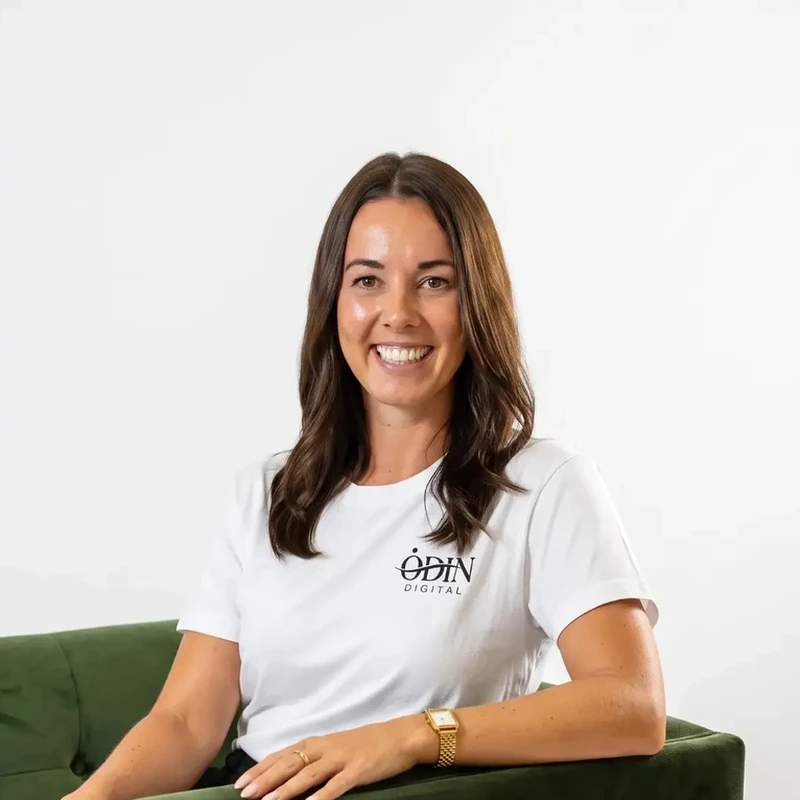
Alexa Blake
General Manager, Odin Digital
Featured In
Recognised by the Industry.






Our Promise
Our 90-Day KPI Guarantee.
The 90-Day Momentum Guarantee
If the agreed KPIs are not met within 90 days, we keep working at no additional charge until they are. No caveats. No fine print.
We can offer this because our system works. Period.
No Lock-In Contracts
Stay because we deliver, not because you're trapped.
Full Transparency
Every action we take, every result we achieve - visible in real time.
Dedicated Team
A senior strategist, content writer, and technical specialist - all assigned to your account.
Getting Started
What Happens When You Reach Out?
01
Free SEO Opportunity Analysis
We conduct a comprehensive analysis of your website, your competitors, and your market. We identify the exact keywords and opportunities that could drive immediate revenue growth. This alone is worth $2,000 - it's yours free, with zero obligation.
02
Custom Strategy Presentation
We present our findings in a clear, jargon-free strategy session. You'll see exactly what's holding you back, what your competitors are doing, and the precise roadmap we'd follow to help you dominate organic search.
03
Launch & Execute
If we're the right fit, we onboard you within 48 hours and begin executing immediately. Within the first 30 days, you'll see our team in action - technical fixes deployed, content strategy activated, and your real-time dashboard live.
The Engagement
Here is exactly what the first six months look like.
Most agency pages go vague at this point, because vagueness is easier to sell and impossible to hold anyone to. This is the actual shape of an Odin SEO engagement: what we do, what you see, what we need from you, and what exists at the end of each stage that did not exist before it.
01
Weeks one and two
We find out what is actually broken before we touch anything
What we do. A full technical crawl of every indexable URL, a log-level look at how Google is spending its crawl on your site, a manual review of the pages that already earn money, and a competitor teardown of the three or four businesses currently holding the positions you want. In parallel we map your commercial keywords to the pages that should own them, and flag every page that is competing with another page you also own.
What you see. A prioritised defect list, written in plain English, with each item scored by revenue impact rather than by how it looks in an audit tool. You get the crawl export and the keyword-to-page map as files you keep.
What you supply. Analytics and Search Console access, CMS access at a level that lets us publish, a list of the services or products with the best margins, and thirty minutes with whoever knows why the site is the way it is.
What exists at the end. A written diagnosis and a ranked plan. Before this stage, nobody at your business could say which pages make money from search and which ones are dead weight. After it, you can.
02
Month one
The technical floor gets fixed and the tracking starts telling the truth
What we do. We deploy the technical fixes that do not require a redesign — indexation and canonical errors, broken internal linking, slow templates, missing or wrong schema, orphan pages, redirect chains left over from an old migration. At the same time we rebuild measurement so organic is attributed to enquiries and sales rather than sessions, including call tracking and form-source capture where they are missing.
What you see. Your live dashboard goes up in the first thirty days, and it shows the same numbers we look at. Fixes are logged as they ship, so you can see the change, the date, and the reason.
What you supply. Developer sign-off if your site is on a locked-down platform, plus a decision on who is allowed to approve published content. That single decision is the most common cause of a slow first quarter.
What exists at the end. A site that can be crawled and indexed properly, and reporting that ties organic to revenue. Most sites we take on have never had both at once.
03
Months two and three
Content and authority start compounding on the pages that sell
What we do. Existing money pages get rewritten against real search intent rather than internal language. New pages are built for the commercial terms that have demand but no page to answer them. Internal linking is restructured so authority flows to the pages you want to rank instead of pooling on your blog. Link acquisition and digital PR begin, targeted at the pages with commercial value.
What you see. Weekly published work, a monthly call that walks through movement by page rather than by average position, and early ranking gains on mid-tail commercial terms. Head terms rarely move this early and we will not pretend otherwise.
What you supply. Subject-matter review. Twenty minutes with a technician, a clinician or a specialist makes a page that ranks and converts; without it you get a page that reads like every other agency's.
What exists at the end. A library of pages that did not exist before, each mapped to a term a buyer actually searches, plus a measurable rise in the number of keywords ranking in the top twenty — the leading indicator that precedes traffic.
04
Months four to six
Rankings turn into enquiries and the programme becomes self-directing
What we do. Conversion work on the pages now receiving traffic, expansion into the next tier of keywords, and a second wave of authority building aimed at the pages that are stuck on page two. We start pruning: content that attracts traffic but never an enquiry gets consolidated or removed, because thin pages dilute the whole domain.
What you see. Enquiries and revenue attributed to organic, page by page and keyword by keyword. This is the point at which the conversation stops being about rankings and becomes about which service line to push next.
What you supply. Honest feedback on lead quality. We can only optimise for the enquiries you tell us were worth having.
What exists at the end. A channel with a known cost per enquiry, a ranked backlog of what to do next, and enough data to forecast rather than guess. This is also the point our 90-day momentum guarantee has long since been settled either way.
Beyond six months the work changes character rather than intensity. The technical foundation is done and only needs maintaining, so the budget shifts towards content depth and authority, which is where compounding happens. Businesses that stay past a year usually do so because the cost per enquiry from organic has dropped below every other channel they run, and the gap keeps widening. That is also the point at which pairing organic with Google Ads management gets cheaper rather than more expensive, because the search terms you already own organically no longer need to be bought.
Client Result
YCL Jewels: 181% more sales in around four months.
181%
Increase in sales, measured in Shopify and GA4
~4 months
Approximate time to that result
2
Channels run: SEO and Google Shopping
The situation
YCL Jewels is a considered-purchase jewellery brand competing in one of the most contested categories in Australian ecommerce. The head terms belong to large retailers and marketplaces with a decade of accumulated authority, and the paid auction is crowded with the same names. Taking those positions head-on is a multi-year project with no revenue attached to the early part of it, which is not a plan an independent brand can fund.
What was actually wrong
Neither the product nor the brand was the problem. Discoverability was. Customers who already knew YCL could find it; the audience who would have bought if they had seen it never got that far, and the shopping presence was not doing enough to close that gap at the moment of intent. The commercial question was narrow: could organic and shopping together bring in enough qualified demand to move sales in months rather than years?
What we did, in order
- 01Prioritised commercial organic termsKeyword work started from revenue rather than volume — the product and category language buyers use when they are close to purchasing, not the top-of-funnel terms that inflate a traffic chart and sell nothing.
- 02Fixed the site so those terms could rankTechnical and on-page work across product and collection pages, so the pages competing for those terms were actually capable of holding a position once they earned it.
- 03Ran Google Shopping against the same intentShopping was structured around the same commercial intent the organic programme targeted, so the brand appeared at the point of decision through both routes instead of choosing between them.
- 04Measured in the platforms that hold the truthResults were read from Shopify and GA4 — actual sales, not platform-reported conversions read in isolation.
What changed, and over what period
Sales rose 181% in around four months, measured in Shopify and GA4 rather than platform-reported conversions. Average order value increased over the same period; the brand has not released a figure for that change, so none is published here. The reason the timeframe is months rather than years is the choice of battleground: marketplaces are broad by design and an independent brand is specific by design, so product-level and style-level language — the way a customer describes the piece they actually want — was territory YCL could win quickly, with purchase intent already attached.
The effect that is easiest to miss happened outside the two channels we ran. A much larger volume of qualified people landed on the site, and everyone who lands becomes addressable: they enter the remarketing pool, they feed lookalike audiences, and they return later as branded search. YCL's social campaigns were run by a different agency and those campaigns performed better as a direct consequence. Nothing about how they were managed changed — the raw material they had to work with did. That is the compounding argument for organic in ecommerce: treated as one system, each channel makes the next one cheaper.
The founder's own words, published in full on the case study: “A pleasure to work with — a 181% increase in sales since we started working together. I can't recommend the team highly enough.” — Fabienne Costa, Founder, YCL Jewels.
The full breakdown, including how the 181% was measured, is in the YCL Jewels case study.
SEO Explained
Short answers to the questions Australians search most.
- How much do SEO services cost in Australia?
- Professional SEO investment is scoped to your competition, website size and growth targets — we quote after a scoping call rather than publishing a price sheet. Odin Digital offers transparent fixed pricing with no lock-in contracts and a 90-day performance guarantee.
- How long does it take SEO to work?
- Most Australian businesses see early ranking movement within 60–90 days and measurable traffic growth between months 4 and 6. Significant revenue impact and page-one positions for competitive keywords typically materialise between months 6 and 12. SEO compounds — every month of consistent work increases authority, rankings, and ROI over the long term.
Investment Guidance
What SEO Actually Costs in Australia.
SEO is a retainer, not a product, and the honest driver of price is how competitive your keywords are and how much content and technical work your site needs. These are the monthly ranges Australian businesses invest with us.
Single-Location Business
$2k - $3.5kper month
Service businesses competing in one city or metro area, typically 20-60 target keywords with moderate competition.
- Technical audit and fix implementation
- 4-6 optimised pages or articles per month
- Google Business Profile and citation work
- Foundational link acquisition
- First meaningful movement usually 3-4 months
Competitive & Multi-City
$3.5k - $7.5kper month
Businesses fighting for high-value commercial terms across several capital cities, or in industries where every competitor already runs SEO.
- City and suburb landing page programmes
- 8-15 content assets per month
- Digital PR and authority link building
- Conversion tracking tied to revenue, not rankings
- Typically 6-9 months to top-3 on head terms
National & Enterprise
$7.5k - $20k+per month
Large sites, franchise networks and national brands where technical scale, migrations and internal linking at thousands of URLs drive the result.
- Log-file analysis and crawl budget management
- Programmatic and templated page architecture
- Migration planning with 301 mapping
- Dedicated strategist and monthly executive reporting
- Custom SLAs and stakeholder training
Every engagement is month-to-month with no lock-in, and we back the work with a 90-day performance guarantee. If your priority is the map pack rather than national rankings, local SEO starts lower; if you need traffic this week rather than this quarter, pair SEO with Google Ads management. For how these ranges compare with the wider market, see our breakdown of what SEO costs in Australia, then book a free SEO audit and we will scope an exact figure against your site.
What Drives The Number
What actually changes the number on an SEO proposal.
Two businesses of identical size can receive quotes that differ threefold, and both can be fair. Understanding what moves the figure is more useful than any published price, because it tells you which parts of your own situation you can change before you buy.
01
How competitive your keywords are
This is the single largest driver and it has nothing to do with your business size. A suburban business competing against three others needs a fraction of the content and authority that a national brand fighting incumbents with a decade of links requires. Competitiveness sets the floor; everything else adjusts around it.
02
The size and state of your site
A twelve-page brochure site and a 40,000-URL catalogue are different disciplines. Large sites bring crawl budget, faceted navigation, duplicate templates and log-file analysis into scope, and the work is engineering as much as marketing.
03
Technical debt you already have
A site built for search costs less to rank. A site carrying a botched migration, a page builder that ships four seconds of render-blocking JavaScript, or an index full of parameter URLs, needs that cleared before content spend does anything. Sometimes this is a month; occasionally it means the site should be rebuilt first, and we will say so.
04
How much content is missing
Price follows the gap between the pages you have and the pages the market searches for. Businesses with a real content library need optimisation. Businesses with five pages and a services list need the library built, and that is the largest recurring line in most proposals.
05
Whether authority has to be earned or maintained
An established domain with genuine coverage needs maintenance. A new domain, or one that has never earned a link on merit, needs digital PR and outreach, which is people-intensive and the least compressible part of the work.
06
What you can do in-house
This one moves the number down. A client who supplies subject-matter expertise, approves content in days rather than weeks, and has a developer who can ship a template change removes real cost. A client where every page waits three weeks for legal review adds it.
07
Whether the site needs rebuilding first
Occasionally the honest answer is that no amount of retainer fixes the platform. When that is true, the sequencing changes and so does the cost profile — a build, then a smaller ongoing programme. It is a bigger cheque earlier and a cheaper channel afterwards.
08
How many markets or locations you are competing in
One city is one programme. Eight cities is not eight times the price, but it is not one either — each market needs genuinely distinct pages, its own local signals, and its own reporting, or the pages compete with each other.
09
How fast you want it
Timeline compresses by adding people and content volume, not by working harder. Wanting results in four months rather than nine is legitimate; it costs more per month and it does not shorten the parts of the process Google controls.
Two things barely matter, despite being the ones buyers raise first. Your industry as a category — beyond the competition and compliance it implies — changes very little; the mechanics of ranking a plumber and ranking an accountant are the same mechanics. And the number of keywords in a proposal is close to meaningless, because a list of five hundred terms is easier to produce than a list of thirty chosen for margin. If you are comparing two quotes, compare what each one says about the first sixty days and who is doing the work, not the keyword count. Our own scoping happens after we have crawled your site, which is why we quote a figure rather than publish one.
Choosing an approach
In-house, agency or consultant — how the three compare
There is no universally correct answer here. The right structure depends on how much internal capacity you have and how broad the work needs to be.
The Decision
What actually goes wrong with each of the three models.
All three models work. They fail in different ways, and the failure modes are more useful to compare than the benefits. Read the continuity row before the cost row — it is the one that decides most of these arguments eighteen months later.
The honest summary: hire in-house when SEO is a permanent, central part of how you acquire customers and you have enough volume of work to keep a specialist busy and enough seniority above them to judge the work. Use a consultant when you already have people who can execute and what you are missing is direction — that is exactly what our SEO consultant engagements are for. Use an agency when you need several disciplines at once, you need them working this month, and you would rather buy the outcome than build the department. Plenty of our clients eventually hire in-house, and the strong ones keep the agency for the specialist work — technical, digital PR, migrations — that a single employee cannot cover alone.
Buyer's Guide
How to choose an SEO agency, including when it isn't us.
This section is written to be useful even if you never speak to us. Choosing an SEO agency is difficult because the work is invisible for the first few months and the industry has spent two decades making that easy to exploit. These are the questions that separate the two, and what a straight answer to each sounds like.
01
Which specific pages will rank, for which specific terms, and why those?
A good answer names pages and terms and explains the reasoning — commercial intent, existing authority, competitor gaps. A bad answer talks about 'increasing visibility' or hands you a list of a thousand keywords exported from a tool.
02
What will you do in the first thirty days, and what will I be able to see?
You want a specific list of technical and measurement work, and a date you get access to reporting. If the first month is described as 'research and strategy' with nothing shipped, you are paying for a document.
03
Who actually does the work, and where do they sit?
Outsourcing is not automatically a problem — plenty of capable agencies use specialist partners, and we are open about the fact that we also provide SEO reseller services to other agencies. What matters is whether you know who is doing it, whether that person is contactable, and whether the strategy and the execution sit under one roof. An agency that cannot tell you who writes your content is an agency that does not read it.
04
How will you attribute an enquiry to organic search?
The honest answer involves Search Console, analytics, call tracking, form-source capture and a stated margin of error. Anyone claiming perfect attribution is either naive or selling something.
05
What happens to everything you have built if I leave?
Every asset should be yours: the site, the content, the accounts, the tracking, the links. If any of it lives in an agency-owned account or subdomain, you are renting your own marketing.
06
Show me a client you failed, and tell me why.
The most useful question on this list. Every agency with real history has one. An agency that cannot name a failure has either not been doing this long or is not being straight with you.
The red flags
- Guaranteed number-one rankings, on any term, in any timeframe. Nobody controls Google's index, and the ones who claim to are usually ranking you for terms nobody searches.
- A twelve-month lock-in contract with a ninety-day exit clause buried in it. Long contracts protect agencies from the consequences of poor work, not clients from anything.
- Reporting built on average position, impressions and 'keywords improved'. All three go up while revenue stays flat.
- Content volume as the headline deliverable — thirty blog posts a month, priced per word. Thin content actively suppresses the rest of the domain.
- Links you cannot see. If an agency will not show you every domain that has linked to you this quarter, there is a reason.
- The audit that arrives before the conversation. A 60-page automated PDF sent as a lead magnet tells you what a crawler thinks, not what your business needs.
- No named person. If you cannot find out who will be doing the work before you sign, you will not find out afterwards either.
What belongs in the contract
- Notice period and what happens during it — whether work continues at full effort through the final month.
- Asset ownership, stated explicitly: website, content, images, tracking configurations, and any accounts created on your behalf.
- Account ownership: Google Search Console, Analytics, Google Business Profile, Ads and Tag Manager must be owned by your business, with the agency added as a user.
- What the reporting contains and how often it arrives.
- Who the named strategist is and what happens if they leave the agency.
- Whether content is written by a human, and who holds copyright once it is published.
- What is explicitly out of scope, so the first change request does not become an argument.
What reporting should actually contain
A useful monthly report answers four questions and ignores everything else. How many people arrived from organic search, and were they looking for what you sell? How many of them enquired, and what did those enquiries turn into? Which pages and terms drove that, so the next month's work has a target? And what did we ship since the last report, with dates? Everything beyond that — domain authority scores, average position across a keyword set nobody chose deliberately, a chart of impressions — is decoration. If your current report takes longer than five minutes to answer whether the channel made money, it is the wrong report.
What nobody can honestly promise
No agency can promise a position, because no agency controls the ranking system, your competitors' investment, or the next core update. No agency can promise a date on which revenue arrives, because that depends on your close rate as much as our traffic. No agency can promise that a page which ranks today ranks in two years without further work. What can honestly be promised is process: the work that gets done, the timeframe it gets done in, the visibility you have over it, and what happens if the leading indicators do not move. Our 90-day momentum guarantee is deliberately written against progress and measurable movement rather than a ranking position, because a position guarantee would be a lie with a contract attached.
How we do it
How we run an organic SEO programme
SEO fails when it is treated as one task. We run it as six connected stages, each producing a specific artefact, so you always know what has been done and why.
- Step 01
Technical crawl and index audit
We crawl the full site with the same tools Googlebot uses, checking robots.txt, XML sitemaps, canonical tags, redirect chains, page speed, structured data and mobile rendering. We cross-reference this against Search Console's index coverage report to find pages Google can see but won't rank, and pages it can't see at all. Most sites lose rankings to a handful of fixable technical faults before content is even considered — this audit finds them first.
What you see: A prioritised technical audit document ranking every issue by rankings impact and effort to fix.
- Step 02
Information architecture and keyword mapping
We map every target query to one page — never several competing pages for the same term — and restructure navigation, internal linking and URL folders so topical relevance is obvious to both users and search engines. This includes deciding which existing pages to merge, redirect or retire. Weak architecture is why some sites publish constantly but never move; this stage fixes the structure the content sits on.
What you see: A keyword-to-page map and a proposed site structure showing where every page sits and links.
- Step 03
KPI agreement and 90-day baseline
Before any content goes live, we agree the specific rankings, organic traffic and lead targets we're accountable to, set against your current Search Console baseline. These KPIs are documented in writing and form the basis of the 90-day review, so there is no ambiguity later about what success looks like or when we assess it.
What you see: A written KPI agreement naming target queries, baseline metrics and the 90-day review date.
- Step 04
Content programme and digital PR build
We build topical content clusters around your priority services and locations, written to answer the actual questions people search, and pair this with a digital PR programme that earns links and mentions from relevant Australian publications. Content without authority-building rarely ranks for competitive terms, so the two run together rather than sequentially.
What you see: A rolling content calendar and a log of published pages, links earned and outreach activity.
- Step 05
Ongoing measurement cadence
Once pages are live, we track ranking movement, indexation, crawl behaviour and organic conversions weekly in Search Console and GA4, adjusting content, internal links and technical fixes as data comes in. SEO is iterative — the first version of a page is rarely the final one, and this cadence is where most of the ranking gains actually happen.
What you see: A weekly reporting dashboard covering rankings, traffic, indexation and enquiries.
- Step 06
90-day KPI review
At 90 days we sit down against the original written KPIs, show what has moved, what hasn't, and why, and reset the next quarter's priorities based on real ranking and traffic data rather than assumption. This is the checkpoint built into the 90-day KPI guarantee.
What you see: A 90-day review report comparing results to the original KPI agreement, with next-quarter priorities.
What you get
What you actually receive
Every organic SEO engagement produces concrete, inspectable deliverables — not vague activity reports.
Technical audit and fix log
A documented list of every crawl, index, speed and structured data issue found, with fixes tracked to completion and re-checked in Search Console.
Keyword-to-page map
One target query set per page, mapped against your existing site structure, so pages stop competing with each other for the same rankings.
Topical content clusters
Groups of pages built around a core service or location topic, internally linked to signal depth and relevance to search engines.
Digital PR and authority outreach
Placements and links earned from relevant Australian publications and industry sites, logged with the anchor text and page targeted.
Structured data implementation
Schema markup applied to service, location and FAQ pages so search engines can parse and display your content accurately.
Search Console reporting access
Direct visibility into indexation status, query performance and any manual actions, so nothing about your data is hidden from you.
Content brief and editorial calendar
A forward schedule of pages and articles to be built, each with a defined target query, intent and word-count guide.
Weekly ranking and traffic reports
Position tracking for agreed queries alongside organic sessions and conversions, delivered on a consistent weekly cycle.
90-day KPI review document
A written comparison of results against the original agreed KPIs, forming the basis for the next quarter's plan.
Where we do this
Organic SEO across Australian markets and industries
For Tasmanian capital coverage, review our SEO Hobart guide explains local service priorities and enquiry reporting.
For northern Tasmania, the SEO Launceston guide maps regional services to useful customer information.
For regional Victorian service businesses, our SEO Ballarat guide explains how travel limits should shape organic targeting.
If you already have delivery resources, the SEO consultant Adelaide guide helps separate advisory scope from implementation.
For businesses weighing advice against managed delivery, the SEO consultant Brisbane comparison sets out the local planning questions.
For specialist guidance in Western Australia, our SEO consultant Perth guide distinguishes strategic advice from ongoing execution.
For Territory businesses building unpaid discovery, the organic SEO Darwin guide considers service coverage and seasonal buying decisions.
For practical catchment planning around Geelong, the SEO company Geelong guide explains what to ask before commissioning delivery.
For ACT businesses comparing delivery providers, the SEO company Canberra guide distinguishes resident, business and procurement audiences.
Agencies adding organic search to their offer can review the SEO reseller Australia programme for scope, client ownership and delivery handovers.
For agency-branded fulfilment rather than direct client delivery, explore white label SEO Australia and its onboarding, approval and reporting process.
Search competition varies significantly by city, which is why we build market-specific strategy rather than one national template. A Melbourne SEO campaign is fighting a dense field of established agencies and professional services firms, while SEO in Sydney often means competing against national brands with far larger content libraries. Brisbane SEO and SEO on the Gold Coast both see heavy seasonal search demand tied to tourism and property cycles, which changes how content should be timed and prioritised.
Smaller capital markets reward organic SEO differently again. SEO in Perth and Adelaide SEO tend to have thinner competition for well-built topical content, meaning solid technical and content work can move rankings faster than in the eastern capitals. Canberra SEO work often intersects with government and professional service search behaviour, while SEO in Hobart suits businesses that can dominate a smaller, less contested search landscape with consistent output. Dense metro pockets like SEO in Parramatta and regional centres like SEO in Wollongong sit somewhere in between, where competing against Sydney advertisers spilling into the same results pages makes local relevance the deciding factor.
Industry shapes the SEO approach as much as location does. We run organic programmes for law firms and accounting practices, where trust signals and long-form authority content carry real weight, and for dental practices and med spas, where AHPRA-compliant content and location pages drive most enquiries. On the trades and technology side, plumbing businesses and SaaS companies rely on organic SEO for very different reasons — one for local service-area coverage, the other for category-defining content that ranks nationally.
How we measure it
How we measure organic SEO performance
Search Console is the primary source of truth — it shows exactly which queries your pages rank for, how impressions and clicks move over time, and whether Google can index every page you want found. We pair this with GA4 to connect organic sessions to actual enquiries, not just traffic volume, because a ranking that doesn't produce leads isn't a result worth reporting.
Where enquiries come in by phone, call tracking data is layered in so organic-driven calls are attributed correctly rather than lumped into a generic 'direct' bucket, and CRM feedback closes the loop on which organic leads actually converted to paying work. This is reported weekly, so movement is visible long before the 90-day review rather than discovered after the fact.
The 90-day review examines the full picture against the KPIs agreed at the start: ranking positions for target queries, indexed page growth, organic session and conversion trends, and any technical issues that resurfaced. It's the point where we either confirm the plan is working or change it based on evidence.
- Search Console query rankings and index coverage
- GA4 organic sessions and conversion tracking
- Call tracking data for organic-attributed enquiries
- CRM feedback on lead quality and conversion to paying work
- Weekly reporting cadence against agreed KPIs
- 90-day review of rankings, traffic and technical health against baseline
Common Questions
SEO Agency FAQs
An SEO agency like Odin Digital improves your website's visibility in search engines through a combination of technical optimisation, content strategy, and high-quality link building. As a full-service SEO agency in Australia, we handle everything from comprehensive site audits and keyword research to content creation and digital PR - so you can focus on running your business while we drive qualified organic traffic.
Most businesses working with a reputable SEO agency see measurable improvements within 3 - 6 months. At Odin Digital, our SEO agency methodology is designed to deliver early wins within 90 days - improved rankings, increased traffic, and a clear path to ROI. Long-term SEO compounds over time, with results accelerating as your domain authority grows.
Look for an Australian SEO agency that offers full transparency, tracks revenue (not just rankings), and has proven case studies. Avoid any SEO agency that guarantees #1 rankings - no legitimate agency can promise that. At Odin Digital, we differentiate ourselves as an SEO agency through real-time dashboards, a 90-day momentum guarantee, and a laser focus on business growth rather than vanity metrics.
An experienced SEO agency brings specialist expertise, advanced tools, and proven systems that would take years to build internally. A dedicated SEO agency like Odin Digital employs senior strategists, technical specialists, and content writers who work as an extension of your team - delivering results faster and more cost-effectively than hiring a full in-house SEO team.
Fees are quoted per scope after we review your account, market and targets. As a premium SEO agency, Odin Digital's engagements start at $3,000/month. We believe in investing properly - cheap SEO agency services often do more harm than good with low-quality links and thin content.
Yes. While our SEO agency works best with businesses doing $500K+ in annual revenue, we offer tailored SEO agency packages for growing companies across Australia. Every client gets the same data-driven SEO agency approach - technical audits, strategic content, and high-quality backlinks, scaled to their budget and growth goals.
Unlike most SEO agencies that hide behind jargon and vanity metrics, our SEO agency is built on radical transparency and revenue accountability. We provide real-time dashboards, a 90-day momentum guarantee, and a proprietary 3-pillar system. As an Australian SEO agency, we combine technical excellence with persuasive content strategy and report organic traffic, rankings and lead volume for our clients monthly.
Absolutely. As a specialist SEO agency, we offer dedicated local SEO services that optimise your Google Business Profile, build local citations, and target geo-specific keywords. Our SEO agency has helped businesses across Melbourne, Sydney, Brisbane, and beyond dominate their local search results and drive foot traffic.
Organic SEO is quoted per scope based on your site's current technical state, the size of the content programme required and the competitiveness of your target queries. There is no fixed national price list, because a five-page local site and a five-hundred-page ecommerce catalogue need very different amounts of work. We provide a written scope and quote before anything starts.
No. There is no lock-in contract for organic SEO. Work is reviewed at agreed intervals, including the 90-day KPI review, and you can end the engagement at any review point. We'd rather earn continued work through results than hold clients to a contract term.
Reporting is weekly, covering ranking movement, organic traffic, indexation status and enquiries generated. You also get direct access to Search Console data rather than a filtered summary, so you can check the numbers yourself at any time, not just when a report lands.
Technical fixes can show up in Search Console within weeks, but meaningful ranking and traffic movement from content and authority work typically takes longer to build, which is why KPIs are set against a 90-day guarantee rather than a shorter window. Competitive queries in dense markets generally take longer than less contested ones.
Our organic SEO team runs the technical audits, content strategy and digital PR outreach, working from South Yarra, Melbourne, with delivery for clients across Australia. You get named contacts for strategy and content rather than work disappearing into an anonymous production queue.
This service covers organic SEO in general — technical health, site-wide content and national or category rankings. Local SEO specifically targets Google Business Profile performance and map pack visibility for location-based searches. Many clients run both, but they are scoped and reported separately because they measure different things.
Yes. Content is published directly on your site and becomes your asset, and any links earned through digital PR outreach point to pages you own. Nothing in an organic SEO engagement is rented — unlike paid channels, the rankings and content remain in place after the engagement ends.
We start from your actual services, locations and current Search Console data to find queries with real search volume and commercial intent, then map each one to a single page so pages aren't competing against each other. Targets are agreed with you in writing before content work begins, not chosen unilaterally.
Local SEO Specialists
SEO Specialists Across Australia.
Our SEO experts deliver city-specific strategies tailored to each market's unique competitive landscape, search behaviour, and industry dynamics.